Planning flatbed hire in Thurrock
Open-bed vehicles suit loads that are awkward in a panel van, such as long timber, fencing panels, pallets of blocks, pipe, or a small machine that is easier to lower from the side. This page is for householders taking on a one-off project, trades collecting materials, and businesses moving goods between sites in Thurrock. It explains how to choose a body size, what the weight figures mean, and how to plan the stop at each end so the vehicle stands safely and legally.
Thurrock is not a single town centre. Addresses in Grays, Purfleet-on-Thames, West Thurrock and other communities can sit under different parking controls, so a plan that works at one end of a job may not work at the other. Check every collection point and every delivery address separately, and confirm the vehicle, its equipment and the hire terms with the supplier before you commit to a date.
Matching the deck to the load
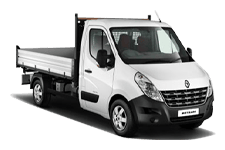
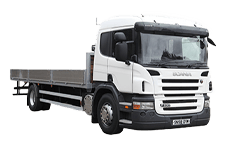
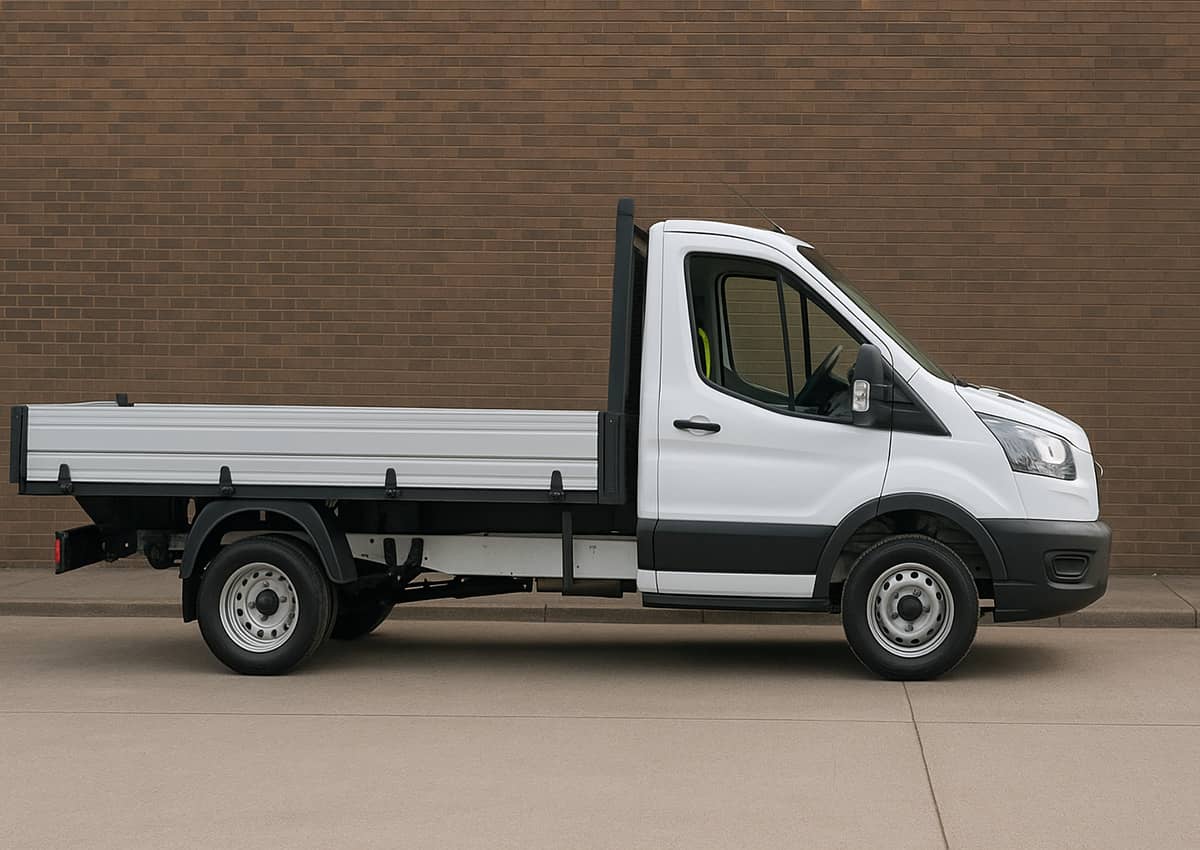
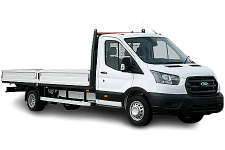
A 3 metre dropside is the compact option. It suits fencing, sheet materials, bagged goods and tools when a larger vehicle would struggle at a narrow drive or site gate. A 4 metre dropside adds deck length for longer timber, pipe or landscaping materials, and gives you more room to space items out so each one can be restrained on its own. Both are representative categories. The bed width, side height and payload of the vehicle you are actually given can differ, so ask for those figures rather than relying on a headline length.
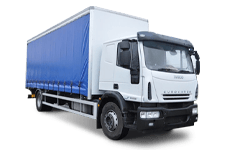
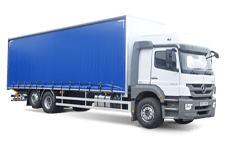
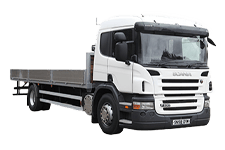
A dropside with a tail lift is worth asking about when you have palletised or wheeled goods and no loading dock or forklift at the destination. The tail lift has its own rating, separate from the vehicle's payload, and both have to be enough for the job. A 7.5 tonne dropside lorry suits multiple pallets, scaffold tube or larger machinery, but only if the driver holds the right entitlement and the route and unloading spot can take a lorry. If the load needs protecting from the weather, a box or curtainside body may be the better choice.
Sources: Nationwide Hire UK: 3 metre dropside, Nationwide Hire UK: 4 metre dropside, Nationwide Hire UK: dropside with tail lift, Nationwide Hire UK: 7.5 tonne dropside
Gross weight, payload and the licence you hold
Three figures are easy to confuse. Unladen weight is the vehicle on its own. Mass in running order adds items such as fuel and the driver. Maximum authorised mass, also called gross vehicle weight, is the most the loaded vehicle may weigh, and it is normally shown on the plate or sticker. Your usable payload is the gap between the running weight and that maximum. It has to cover passengers, pallets, packaging and any equipment you carry, not just the goods.
The licence you need depends on the vehicle's maximum authorised mass, not on how much you plan to carry. A standard category B car licence generally covers vehicles up to 3.5 tonnes, while vehicles over 3.5 tonnes and up to 7.5 tonnes need C1. Check the categories on each driver's current licence, and bear in mind that a supplier may set its own age or experience rules. On multi-drop runs, an early drop can leave more of the remaining weight on one axle, so move the load around to spread it and use a weighbridge if you are unsure.
Sources: GOV.UK: vehicle weights explained, GOV.UK: driving licence categories, DVSA: HGV overloading basics
Several towns, several sets of parking rules
Thurrock Council notes that many towns in the borough have one or more controlled parking zones or permit parking areas. For a hire, that means you should look up the collection address and the recipient's address separately. A driveway in one community and a terraced street in another can have completely different rules, and knowing one tells you nothing about the other.
The council publishes a list of the roads in each zone. For example, it names Grays parking zone A and includes defined lengths of Hogg Lane. The list helps you find the controls that may apply, but it does not mean the whole road is covered, it does not give the hours in force and it does not give you any right to load. Look up the exact address, then check what the signs on the street actually say on the day.
Sources: Thurrock Council: roads in parking zones, Thurrock Council: parking zones
Reading entry signs and planning around bank holidays
Permit parking areas may not have signs or bay markings inside them. The rules are often shown only on signs where you enter the area, so a street that looks unrestricted once you are in it may not be. Before you decide where the vehicle will stand, drive or walk the approach and read every entry sign. Ask the person receiving the goods which way they expect you to arrive.
A public holiday can look like a good day for a project, but the council says restrictions do not change on public holidays unless official signs say otherwise. If you are collecting or delivering on a bank holiday, make the same parking and unloading plan you would for a working day. Do not assume enforcement is off.
Sources: Thurrock Council: parking zones
Planning the stop: footprint, sides and receivers
You need more space than the deck length. Allow for the full length of the vehicle, anything sticking out past the back, the width of a lowered side, and room for people to handle goods beside it. If the load overhangs the rear or sides, measure how far it sticks out and check the current official guidance on overhanging loads. Depending on the measurement, you may need to mark the load and sometimes give notice before you travel.
Loading from the side is a real advantage of a dropside, but only on clear, level ground where the vehicle stands steady and nobody has to work in moving traffic. Agree the arrangements in advance with whoever is in charge at each end: who unloads, with what equipment, how pedestrians will be kept clear, and what happens if the planned spot is taken. If a receiver cannot answer these questions clearly, change the time or the location rather than making it up at the kerb.
Sources: HSE: safe loading and unloading, DVSA and DfT: overhanging loads on vehicles
Securing the load before you move
The load has to be loaded safely, secured for the journey and unloaded safely, using a securing method that suits both the load and the vehicle. Weight and friction alone will not hold it, and the dropsides are not enough on their own either. Before loading, check the platform, the body, the anchor points and the plated weights so you know what the vehicle can take.
Straps, chains, chocks, anti-slip matting and headboards all have their uses, but which ones you need, and how many, depend on the item and on the rated anchor points. Sheeting and rope hooks are not anchor points. Ask the supplier whether any restraint equipment is included rather than assuming it is. If it is not, bring rated straps that suit the load, and check the tension again after the first few miles and after every drop.
Sources: DVSA: securing loads on HGVs and goods vehicles, DVSA: load securing basics, DVSA: ways to secure a load
What open-bed hire offers, and the conditions that come with it
Self-drive dropside hire lets you choose your own timing, collect materials straight from a merchant and load awkward items from three sides. Those benefits come with conditions. Deposits, mileage, insurance cover, who may drive, age limits and whether you can use the vehicle for commercial work are all set by the supplier you book with, and they vary. Other hire companies' published terms show the kind of clauses to expect, but only your own booking documents apply.
Before the day, read the damage and fuel terms, find out what happens if the vehicle comes back late or overloaded, and confirm the handover checks you will be asked to do. Photograph the vehicle when you collect it, make sure existing marks are noted on the paperwork, and keep the plated weights to hand while you load.
Sources: Third-party reference: Nationwide Hire UK terms and conditions